Sunday, December 06, 2015

Best Books of 2015

These were favorites of this year in a variety of genres.

The Art of Asking, Amanda Palmer (best memoir, life-changing)

Girl in a Band, Kim Gordon (best memoir, creativity expanding)

Stand Your Ground: Black Bodies and the Justice of God, Kelly Brown Douglas (best analysis of emerging theological category)

Culture and the Death of God, Terry Eagleton (best literary criticism on secularity)

Negative Certainties, Jean-Luc Marion (best translated phenomenology)

The Wake: A Novel, Paul Kingsnorth (best English not in English)

Between the World and Me, Ta-Nehisi Coates (best non-fiction, epistolary)

Bonhoeffer's Black Jesus, Reggie Williams (best theological history)

A Legend of the Future, Agustin de Rojas (best Cuban science fiction)

The Politics of Jesus: A Hispanic Political Theology, Miguel de la Torre (best Jesus, liberation)

On the Run: Fugitive Life in an American City, Alice Goffman (best deep ethnography)

Hidden Inheritance: Family Secrets, Memory, and Faith, Heidi Neumark (best #lutherancreative)

The Fear of Islam: An Introduction to Islamophobia in the West, Todd Green (most important book)

Christo-Fiction: The Ruins of Athens and Jerusalem, Francois Laruelle (incomprehensible comprehensible philosophy of Christ)

What Should We Do With Our Brains, Catherine Malabou (the book I recommended most often in 2015)

The Age of the Crisis of Man, Mark Greif (idiosyncratic literary criticism)

Numenera

The Love of God: Divine Gift, Human Gratitude, and Mutual Faithfulness in Judaism, Jon Levenson

Making All Things New, Ilia Delio

Johannes Bugenhagen, selected writings (best Reformation era collection)

Bewilderments: Reflections on the Book of Numbers, Avivah Zornberg (best biblical criticism)

The Water Knife, Paolo Bacigalupi (best near future science fiction)

The Folly of God, John Caputo (best new presentation of a theological position)

The Mission of Demythologizing: Rudolf Bultmann's Dialectical Theology, David Congdon (also best historical theology)

The Invention of Nature: Alexander von Humboldt's New World, Andrea Wulf

Heidegger's Confessions: The Remains of Saint Augustine in 'Being and Time' and Beyond, Ryan Coyne (best cross-over between philosophy and theology)

The Lion of Rora, Cristos Gage (best graphic novel about Waldensians)

Decreation: The Last Things of All Creatures, Paul Griffiths

Slow Pilgrim: Collected Poems, Scott Cairns

The Homebrewed Christianity Guide to Jesus, Tripp Fuller (best Jesus, zesty)


Friday, December 04, 2015

The Board Game Renaissance and Why It Matters

Although some traditional board games still dominate the market (Chess, Checkers, Backgammon, Scrabble, Monopoly, Clue, Othello, Trivial Pursuit, Pictionary, and Risk as the top ten), table top games have seen in recent years a resurgence, a diversification, and a deepening.

A couple of theories. First, I think many Eurogames have finally come into the mainstream. Eurogames, which for a long time were indie games in the United States, only found in hobby stores or on-line, have now made their way into big box stores like Target and Barnes & Noble.  Chief among the Eurogames is Settlers of Catan, whose fame was ensured this last year when everyone learned the Packers played Catan. Eurogames are attractive for many reasons, including their abstract playing pieces, shorter play time, simplified rule structures, shift towards economic rather than military strategy, focus on strategy over luck, and no player elimination.


Eurogames

Hand-sculpted 3-D Homemade Version of Catan
If you're interested in Eurogames, you can't go wrong with Catan. It's a fun and accessible turn-based resource development game, and the design is gorgeous. If you want to swim upstream, consider Agricola (a medieval, agricultural resource management turn-based system), Ticket to Ride, a railway-themed German-style game, or Power Grid, an electric-supply grid game. A couple of other games comparable to these that BoardGameGeek rank high include Puerto Rico, Carcassonne, or the cooperative game Pandemic. I love the first two. Pandemic I could take or leave, but many people I know love it.

The best thing about Eurogames is the enjoyable game-play that is also strategically challenging. And because they reliably last approximately one hour to 90-minutes in duration, players can plan around a game.

Card Games

But Eurogames aren't the only games that have seen a resurgence in the last few years. A variety of card-games, including Living Card Games and cooperative card games, have expanded. The biggest money-maker in card games is still the collectible card game, Magic: The Gathering. But for players who want to build decks and play strategic cards, but don't want the almost limitless expense of Magic, living card-games offer a fixed distribution method.
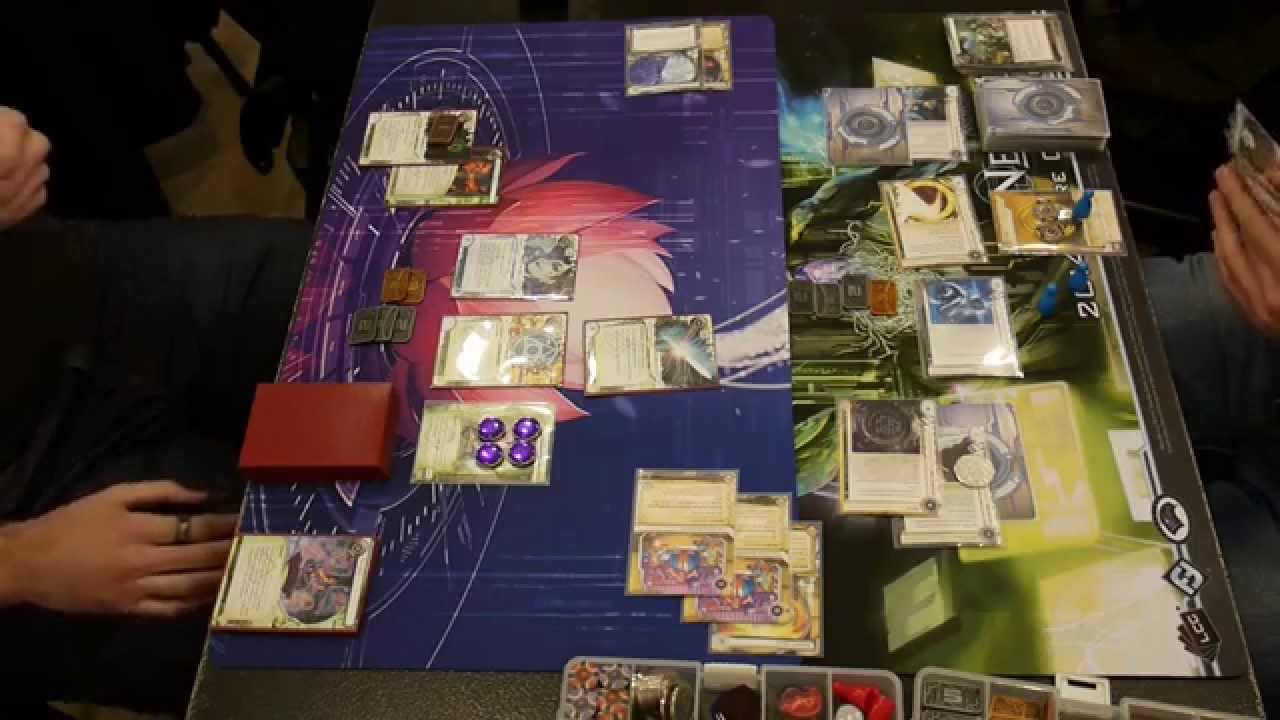
Netrunner tournament match

My favorite LCG discovery this past year is Netrunner: Android, which is based on the world of William Gibson's Neuromancer, which later inspired a great RPG (to be discussed later), Shadowrun. It is a two-player asymmetrical card game, which means each player builds and then plays with their own deck of cards, and each type of deck (a runner or a corporation) builds completely different type of decks. Runners are hackers. Corporations defend themselves against hackers.

Proof that card games and table-top gaming are truly changing the entire gaming scene is illustrated nowhere better than with Hearthstone, a video-game that plays like a table-top card game. Developed by World of Warcraft, it now has more buzz than WoW itself. It's free, and worth checking out if you are snowed in some day this winter.


My absolute favorite deck-building game is Star Realms, and I can't recommend it highly enough. It has very simple game-play and a fast learning curve, comes packaged like a traditional deck of cards, but also develops out into an incredibly complex game, as you develop strategies for your fleet of ships and colonies. Like many games I'm mentioning in this post, there is also a mobile app adaptation.

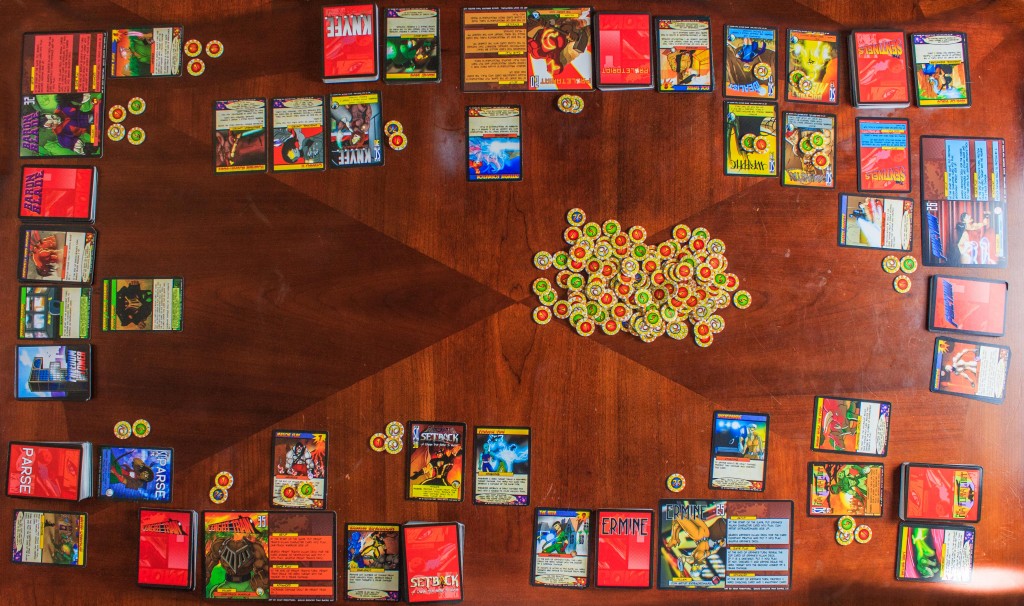
The other card game we've spent a lot of time collecting and playing this past year, is the co-operative Sentinels of the Multiverse. You team up together with other superheroes to defeat a villain in a setting of the multiverse. The art and game play are both top-notch, and if you defeat the villain, you all win.

All these card games are satisfying on a variety of levels, including the game-play itself, the opportunity to collect cards, and the opportunity to compete against others. For example, Netrunner afficianadoes attend tournaments, share best deck builds, and even podcast strategies for game-play.

To discover tons more games along the lines of these, I highly recommend the Roseville, Minnesota based Fantasy Flight Games.

Role-Playing Games

Of course, the reason so much of the gaming universe changed can be traced back to the rise of role-playing games in the latter part of the 20-century.  For this, we have Lake Geneva, Wisconsin and Gary Gygax to blame. The perennially popular Dungeons and Dragons (which recently received an amazing update in its 5th edition) changed the face not only of table-top games, but video games, fantasy novels, and so much more. 2015 saw a number of books arrive analyzing the cultural implications of RPGs. Michael Witwer's Empire of Imagination, though not particularly well-written, describes the business side of Dungeons & Dragons well.  For the culture, read Of Dice and Men. And for the absolute best and fascinating account of RPGs in history and philosophy, read Jon Peterson's Playing at the World.

RPGs are what my son and I spent the most time playing this year, but we played the spin-off of Dungeons & Dragons (also now larger than D&D). Pathfinder came out as an open-source gaming platform while D&D was transitioning from version 3.5 to version 4.0. Pathfinder is crunchier than D&D 5th edition (which means the rules are bit more complex and the mechanics specific). But the appeal is the Pathfinder Society, which allows players to register for games all across the country and then play them at local game stores. This is how my son and I most frequently play. We now have three game stores in Fayetteville, Arkansas, and a few more in neighboring towns.

As a by-product of playing Pathfinder, I've been geeking out and reading the core rulebooks for a variety of other RPG systems. The ones that intrigue me the most include Shadowrun (mentioned above, which is a gaming system that includes both near-future technology and magic), Numenera (earth one billion years in the future, when technology sufficiently advanced is indistinguishable from magic), Thirteenth Age (which my brother has begun playing), and Microscope, an incredibly intriguing meta-game. And finally, the trio of Star Wars RPGs that have come out in the last three years, each of which allows game-play as part of a different aspect of the Star Wars universe. Not only are the rules intriguing, they also serve as great omnibus reads to prepare all of us who are anticipating the new movie coming out next week.


Outliers

Finally, I think a lot of us play more games, and are exploring a wider array of games, because we like the tactile dimensions of playing games with others. Video games aren't going away, and will remain the bigger industry, but there is just something about cards, and play pieces, and sitting down at table with others.

Some other favorite discoveries of the year, games that are even more difficult to describe (although many web sites like Board Game Geek offer spectacular reviews) but absolutely fun to play, include:

Galaxy Truckers--you build a ship out of garbage and then use it to travel the galaxy

Cosmic Encounter--epic battles between competing alien races

X-Wings--use models of Star Wars ships to compete in military skirmishes. This will surely be the game of the year. It's everywhere, and really fun.

Twilight Struggle--a game of the Cold War, and probably the best board game on the planet.

http://fivethirtyeight.com/features/designing-the-best-board-game-on-the-planet/


Kids

I asked the kids which games were their favorites of 2015. The family winner was Apples to Apples, which has been around a while. The new junior edition was a particular hit. My good friend gave us a copy of Sushi Go, also a hit. And the two our youngest requests to play frequently include Labyrinth (a children's Eurogame), and Tetris and Angry Birds, both card-game adaptations of video games.

So why do these games matter to me? Well, I guess I'm probably riding along on a sub-culture Zeitgeist. Many of my friends have ramped up their game-play in recent years. Perhaps we're attempting to escape for a bit back to some of the leisure we had as children. But I also think in the Internet age, and the era of gamification, there's really something about turning off the devices, gathering around a table, and losing yourself in a game. The collector aspect of the game taps into another part of our hobby and play, and the rise of game parlors as alternative third spaces (beyond the proliferation of book stores and coffee shops) means an intriguing shift in our culture as a whole.

So finally, there's simply lots more cultural analysis of game culture. So I'll end this very long post with a few excellent references for further reading. But before you read too much, check out one of the games. Grab some friends. And consider what you might bring from play back into real life.

On inclusion: http://geekandsundry.com/5-tips-for-better-inclusion-in-tabletop-games/

On crowdfunding: http://fivethirtyeight.com/features/crowdfunding-is-driving-a-196-million-board-game-renaissance/

Gen Con: http://geekdad.com/2015/08/favorite-things-gen-con-2015/


Thursday, December 03, 2015

Best Albums of 2015 (and lots of rabbit hole links)

It's time for "best of" lists. Here's my best albums list for 2015, with a bit of commentary.

1. El Vy--Return to the Moon (The National won't have an album until 2017, this will hold me over)
2. Calexico--Edge of the Sun (important in our refugee and immigration conversation, here's a guide to every song on the album)
3. Kamasi Washington--The Epic (a best-selling three CD jazz album)
4. Kidz Bop--30 (the family favorite)
5. Jamie xx (I can't get enough of the beats)


6. Palehound--Dry Food
7. Courtney Barnett--Sometimes I Sit and Think and Sometimes I Just Sit (Courtney and Palehand are my favorite car albums)
8. Wilco--Star Wars (coolest release ever, releasing for free, similar to Miley Cyrus, whose album was also free and wild)
9. Sufjan Stevens--Carrie and Lowell (I bought it on tape!)
10. Sleater-Kinney--No Cities to Love (these are the queens of rock)
11. Wavves/Cloud Nothings--No Life for Me (Cloud Nothings play an important role in a work of theology this year, Catherine Kellers Cloud of the Impossible).


12. Kathryn Stott and Yo-Yo Ma--Songs from the Arc of Life
13. Mark Ronson--Uptown Special (my favorite novelist, Michael Chabon, wrote the lyrics)


14. Jack Ü (Skrillex and Diplo get together)
15. Mbongwana Stars--From Kinshasa
16. D'Angelo--Black Messiah (December 20
14, but amazing)
17. Chris Potter--Imaginary Cities


18. Vijay Iyer--Break Stuff
19. Bad Plus and Joshua Redman
20. Jack DeJohnette--Made in Chicago
21. Wild Card--Organic Riot
22. Alexander von Schlippenbach Trio--Features
23. Fred Hersch--Solo
24. Godspeed You! Black Emperor--Asunder, Sweet, and Other Disasters
25. Shovels and Rope--Busted Jukebox #1


And the album I haven't heard yet but am hoping for for Christmas is Joanna Newsom's Divers.

Wednesday, December 02, 2015

The Philemon Advent Calendar

Welcome to the Philemon Advent calendar. For the next 25 days, receive short holiday devotions in your inbox. Together we will deepen our anticipation of God's coming kingdom and prepare for the nativity of Christ.

Philemon may seem like a strange text to pair with the holidays. The excuse is numerological. There are 25 days in a traditional Advent calendar. There are 25 verses in Philemon. Each verse will open space for a brief reflection and a prayer.

In addition, Philemon is perhaps unique in the whole New Testament as showing us how personal, and interpersonal, letters can be. This letter between Paul and Philemon is much like a good Christmas letter. It helps sender and recipient know each other better. The letter connects them, even across great distances, and unites them in the love of Christ.

Because Paul identifies himself so closely with Onesimus (the slave on behalf of whom he is writing the letter), he models the shape of the incarnation in his own life. In the same way Christ took our part in the incarnation in order to reconcile us to God, Paul takes the part of Onesimus in order to reconcile himself to Philemon. It is a beautiful model for how Christ's incarnation, his birth, truly matters for our own life of faith, because all of our interpersonal relationships are transformed in Christ.

We are all in this holy story together, players in God's drama. Our place in that story is determined by our place "in Christ," and as Paul models it in his letter to Philemon, we are improvisers, free in Christ to perform the gospel in creative and generative ways, ways that matter for the life of the world.

--

1: Paul, a prisoner of Christ Jesus, and Timothy our brother, To Philemon our dear friend and co-worker.

This is the week many of us sit down to draft Christmas letters. Some are old school, hand-written notes to many and sundry. Others are mid school, typed and crafted, with bible quotes and poems and photos, then laid out in Publisher. Others are new school, typed quickly and updated on Facebook or Instagram.

However you write your Christmas letter, or even if you don't send one at all, you have some that are arriving. So you can imagine by comparison this little letter from Paul. He sends it from jail (are any of your Christmas letters addressed to those in prison?). He sends it together with a co-author, Timothy (Is yours sent as a family? Do you include your cat as co-signatory? Is your new baby the author?). He addresses it to a dear friend and co-worker in the gospel.

It is enough, on this first day of our journey, to simply be aware. Paul is writing a letter. He puts pen to parchment, friend at his side, another friend in mind, and he opens that most basic and intimate of moments: To say what needs to be said, and hope against hope it is heard.

Lord Jesus, we are also your prisoners, free of all other allegiances and tuned to your reign. Set us free in you. Make us mindful of our brothers and sisters in Christ, our friends and family, our co-workers in the gospel. Guide our hands as we write our words, and by your Spirit make them your words also. Amen.

2: to Apphia our sister, to Archippus our fellow soldier, and to the church in your house:

Paul's letter is addressed not simply to Philemon, but to his household. It is likely (but not certain) that Apphia is Philemon's wife, and Archippus his son. In other words, although the title of the letter may make us believe it is a personal letter, it is actually a communal letter, addressed not only to Philemon's whole family, but to the church that meets in their house.

This house church receives a letter from Paul that is radical in its implications. The letter is about Onesimus, Philemon's slave. Philemon sent Onesimus to Paul in prison, probably delivering food and other necessities. Paul sends Onesimus back to Philemon and his house church with this letter. The letter is transformative. It invites Philemon and his church to reconsider how Christian community is conceived. If Philemon receives the letter in the spirit in which it is sent (and there is every reason to believe he and his community did), it would "collapse the all-too-frequent oppressions that mar our world still today" (The New Testament Fortress Press Commentary on the Bible, Eric Barreto, 615).

Onesimus went to Paul as a slave. He returns to Philemon not as a slave but as a sibling, property no longer but rather brother. The gospel of Jesus Christ transforms Onesimus's relationship to the church at Philemon, Apphia, and Archippus's house.

Imagine what this might look like in each of our own households. That each of our households thought of itself as, and sometimes gathered, a church. That we sent food to those in prison. That we received letters challenging us to make less distinctions based on wealth, class, power, and race. That because Christ came as a child, one of us, we can imagine ourselves becoming like those whom we consider most different, or lower.

3: Grace to you and peace from God our Father and the Lord Jesus Christ.

This is the classic Pauline greeting. It's so brief and beautiful and clear. No wonder many Christians borrow it for their own letters, and churches use it in their liturgies. When we borrow it, we align ourselves with the author, identify with him, so anyone who hears us speak or reads a letter with these words thinks to themselves, "That sounds like Paul. That is Paul. It's a New Testament thing."

How we associate, the posture we bring to an encounter, makes so much difference in our communication. Paul has already opened his letter self-identifying himself as "a prisoner of Christ Jesus" (v. 1). Because he is a prisoner of Christ, he is associated with the lowest of the low. He is a prisoner, a slave, poor and weak and vulnerable. So when he writes verse three, "Grace to you and peace from God our Father and the Lord Jesus Christ," he does so not from any sense of superiority or power, but from vulnerability and weakness.

So he is already inviting the recipient(s) of the letter into that same vulnerability. It is a gentle, non-coercive invitation, but it is an invitation nonetheless. He is saying, in effect, "May I greet you in solidarity and mutuality as someone like me, a fellow prisoner in Jesus Christ? May I call you slave?"

Christ approaches us through the Incarnation in a similar manner. He does not descend in a ship from a position of power and say, "Take me to your leader!" Instead, he arrives clothed in the humility of swaddling, resting in the feeding trough of the animals, housed in temporary shelter, hungering for mother's milk and gentle touch, and washed in the waters of new birth.  In this way Christ is the very "grace and peace" Paul mentions in his letter. This is grace and truth, to know this one Jesus Christ, and his/our Father, God.

God our Father, you are grace and peace for us in your Son Jesus Christ. We pray that his Lordship might make us fellow prisoners, equally slaves, all servants of you and of each other, and so recognizing the full humanity and vulnerability and mutuality of all. Amen.

4: When I remember you in my prayers, I always thank my God

Paul was remarkable for many reasons. One of those was his commitment to prayer, and his commitment to giving thanks. In fact, although Paul is famous for his doctrine of justification by faith apart from the works of the law (the classic insight of faith Lutherans in particular emphasize) Paul actually spent as much or more of the content of his letters on the topic of thanksgiving. In part, he did this because it was an important standard form in Christian letters of the early church. Gratitude for early Christians was a major virtue.

Opening the letter with thanksgiving, and appealing to Philemon's faith (in verses 5-7 Paul refers to Philemon as a model of faith), is also a winning rhetorical strategy. It has sometimes been popularized (and vulgarized) as a "criticism sandwich." If you have a criticism, sandwich it between two compliments.

This is not precisely what Paul is doing in his opening thanksgiving. What he is doing is offering a favor to Philemon, the favor of his thanksgiving and prayer, and anticipates/hopes that Philemon will reciprocate. Not all gifts are free. Some are given in the hopes that the free exchange of gifts will be reciprocal. A classic Roman author, Seneca, wrote a whole book On Favors. The voluntary economy of favors was a rich and gracious tradition, and Paul situates himself in the middle of it with these thanksgiving verses at the beginning of the letter.

We can learn from Paul this simple spiritual practice: If you wish to make an appeal to a brother or sister in faith about a matter around which there may be disagreement, first do the important spiritual work of giving thanks for them, and say thank you to them. Then pray for them. Imagine them praying for you. In this holiday season, as we shop for a prepare gifts for one another, let us deepen our commitment to a free exchange of favors that honors God as the great gift giver.

God of all favors, we give you thanks for the many gifts we receive from your gracious hand. Strengthen us to see your gifts even in those with whom we disagree. Through your most gracious gift, Jesus Christ, we pray. Amen.